MEMBER SPOTLIGHT: KELSEY EVANS ON EARTH MONTH AND CIRCULAR ECONOMY
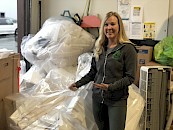
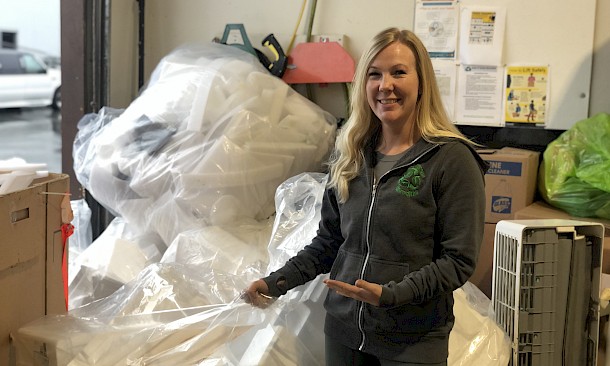
“It only takes one person to make a big difference.” In celebration of Earth Month this April, we sat down with IATSE 891 member Kelsey Evans to talk all things sustainability. Kelsey shares the highlights and challenges of running her company, Keep It Green Recycling, her focus on building a circular economy, and what members can do to help make our industry just a little greener.
Kelsey Evans saw a need for a more effective waste system when she first started working in the Production Office almost 22 years ago, but her passion for sustainability began much earlier. Growing up in the small coastal town of Powell River on British Columbia’s Sunshine Coast, Kelsey was introduced to recycling in third grade by her teacher Ms. Woolcott. She created a hands-on recycling program where students learned how to properly sort materials and even visited a local recycling depot to see the process first-hand. Ms. Woolcott’s efforts inspired Kelsey to continue her recycling habits from high school through university and into her career. “It stuck with me forever,” she says.
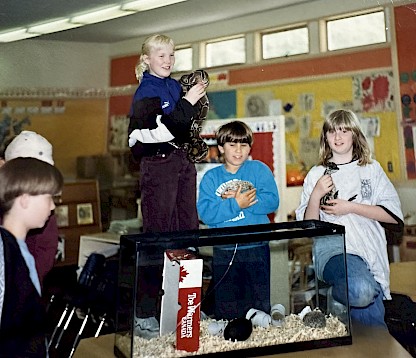
Photo of Kelsey (standing in the middle) and her peers in Edgehill Elementary School.
In our 2022 Member Spotlight with Kelsey, she shared her career journey in the film industry where she started as a Locations Production Assistant and worked her way up to Production Coordinator. She talked about how Keep It Green Recycling was a result of her efforts in recycling bottles on set and being the go-to person for any recycling needs.
At the time, Keep It Green Recycling had a total of five trucks making at least 60 stops a day to productions filming across the Lower Mainland, picking up materials to be recycled or reused at the Material Reuse Warehouse. Since then, they have had to reduce to three trucks while continuing to meet the same level of demand, due to the WGA and SAG-AFTRA strikes in 2023 and the overall slowdown in production activity.
“It was a really hard six years, honestly, but right now we’re really focusing on circular economy,” says Kelsey. “I think our industry needs to focus on making sure all our stuff is being dealt with properly, and budgeting is a big one,” she adds.
Currently, there is a lack of budgeting for sustainability on set. Without proper financial planning, it is difficult for productions to practice sustainability and support material management across departments. “We need to budget,” Kelsey stresses. “For example, Set Dec. needs to budget for material reuse and make a point person in their department a Sustainability Rep., also Props, Costumes, or maybe the Production Office… there needs to be enough money budgeted for dealing with materials properly.”
BUILDING A CIRCULAR ECONOMY
“For me, a circular economy means keeping things out of the landfill, trying to keep materials in use rather than letting them end up as waste,” says Kelsey. She emphasizes the importance of reusing materials for as long as possible, until it reaches its end life. The goal is to reduce, reuse, and recycle, but most people tend to focus only on recycling and overlooking the first two. “Reusing is a really big one, whether that’s sticking to rental houses, or buying secondhand. It’s the best thing you can do instead of buying new,” she adds.
Kelsey opens up about her goals of building a circular economy and what the upcoming years will look like for the company. “That’s our goal. We just signed our lease for the next three years for the Material Reuse Warehouse, and we are working really hard with the film industry and all the studios in LA to make sure that the Warehouse can receive the support it needs and ensure materials get used,” she says. There are still a lot of gray areas with what’s happening with some materials from set, so she hopes to get this solved with the help of Reel Green, CreativeBC, and other unions. “We’re still not getting certain items like flats, doors, and windows… all that stuff could still be saved and reused, so that’s going to be a big priority for us,” she adds. With local theatres and small film schools constantly on the lookout for flats, the general community looking for prefabricated windows for greenhouses, and location cardboard being reused by daycares and farms, to name a few — it shows that items that people may not deem reusable are actually in high demand!
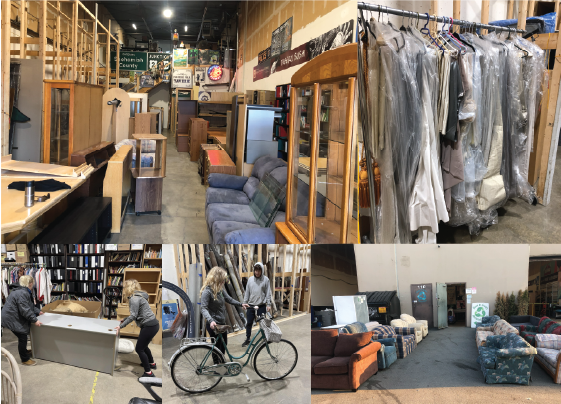
A collage of the many items that get dropped off at the Material Reuse Warehouse, which are all available to pick up for free. From furniture, to clothing, to bikes – the team carefully sorts through items to make sure they are in good and safe condition. Check out the Material Reuse Facebook Group to see new items updated daily!
The Material Reuse Warehouse accepts materials from production offices, film sets, junk removals, businesses, and the general public. Once materials are accepted, they are made available to the film industry, schools, community theatre groups, charities, and more, all for free. It is a budget and environmentally friendly alternative to buying new.
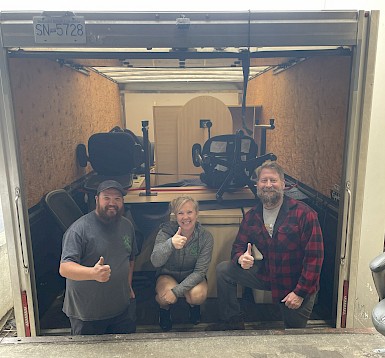
When Urbanjacks started up in 2023, they needed office furniture like desks, fridges, and shelves, which the Material Reuse Warehouse were able to provide! From left to right: Scott (Material Supervisor, Keep It Green), Kelsey (Owner, Keep It Green), and Aaron Laslo (Urban Lumberjack, Urbanjacks)
SMALL ACTIONS; BIG IMPACTS
Kelsey and her team not only keep materials out of the landfill, but they have also been able to contribute to the local community such as schools and daycares, nonprofit organizations and charities, refugee families, farmers, and so on. Kelsey describes a few heartwarming moments that come to mind, like when a refugee family came in and took home some scrap carpets which helped keep their cement floors warm, or when they donated pots and pans from film sets to kindergartens for kids to play with.
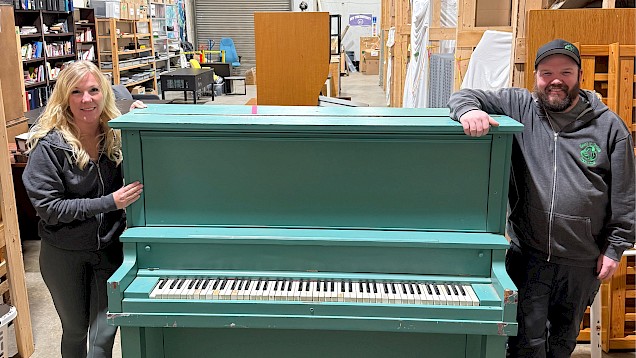
This blue piano first arrived at the Warehouse in 2023. Instead of being disassembled or tossed to the landfill, it has been picked up by productions and reused for four different productions… and counting! “This is a great example of circular economy because we’re keeping the piano out of the landfill,” Kelsey says. “If nobody takes it, it will have to be taken apart… and taking pianos apart are not fun, it’s not safe, and we never recommend anyone doing that,” she adds.

For Fan Expo 2026, a customer sourced some materials from Keep It Green and created this brilliant Hell Diver costume! Some of the materials, to name a few, include eva foam, old phones, Velcro, different fabrics, thread, felt, lighting gels, yoga mats, contact cement, wooden dowls, and many more.

The team over at Centre Stage Dance Studio was putting on a production of ‘The Little Mermaid’ and was able to reuse some materials for their “under the sea” creations! This ship’s helm was made with spindles and paint. They were also able to reuse some tape, spray paint, primer, screws, packing paper, and more, all sourced from the Warehouse.
“A lot of stuff can be reused. You just need the right person to see its potential.”
MYTH-BUSTING SEGMENT
There are plenty of misconceptions when it comes to sustainability, especially on set. In this segment, we stated some common myths to Kelsey – here’s what she has to say:
- All Recyclables End Up in Landfills.
While not everything placed in a recycling bin can actually be recycled – often due to contamination or mixed materials – proper sorting and cleanliness can make a significant difference. Whether it’s at home or on set, when recycling is done correctly, those materials are far more likely to be reused rather than discarded, so this statement is false!
- One Person’s Effort Doesn’t Make a Difference.
False. All it takes is one person! “I started off in the industry where we weren’t even talking about sustainability. I started small, I did my best, and then it just spread,” says Kelsey. One person’s small action can inspire others and gradually lead to shifting an entire workplace.
- Sustainability is Too Expensive.
This is a common misconception, but there are lots of ways to balance out costs such as cutting back on single-use water bottles or other unnecessary purchases. Many reports have shown that going green doesn’t have to come with a higher cost. So no, sustainability is not too expensive!
- Reusable Materials are Lower Quality than Buying New
False. In many cases, reusable or older materials can actually be higher quality than brand new. Real wood is a great example! Choosing to reuse doesn’t mean compromising on quality, but rather, working with more durable, well-made materials.
.
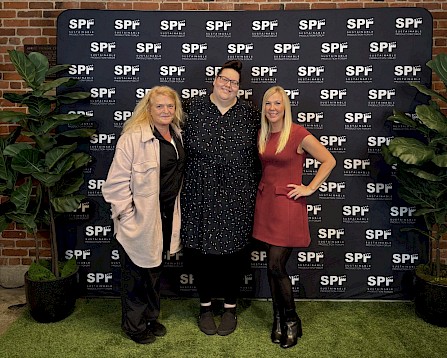
Kelsey and her team at the Sustainable Production Forum 2025. From left to right: Mary (Events Team), Katrina (Operations Coordinator), Kelsey (Owner).
In honour of Earth Month, we asked Kelsey what she would love to see from our members and community in terms of participation and initiatives. “I would really like for members to look at what they’re using in their departments and think about what is going to happen with that item,” she says. Before buying something brand new, Kelsey suggests members ask themselves the following few questions:
- Does it actually need to be bought?
- Where is it going to end up?
- Does it need to be made off-size, or could you make it a certain right size?
Take this month as an opportunity to be more mindful with your purchases, your material usage, and your environment. It does make a difference!
If you’re looking to be more sustainable on set but aren’t sure where to start, Kelsey has suggested a few easy ways that we can all do to help make our industry a bit greener. “One simple step is to take the carbon literacy course through Reel Green™, which is free!” Kelsey says. Members can also speak with their production office about becoming a Sustainability Representative – someone who helps guide decisions around waste streams and supports more sustainable practices on set.
“I think if any member wanted to be a green lead or a rep. in their department, I don’t think anyone’s going to say no. It only takes one person to make a big difference.”
Written by Erica Lim, Copywriter for IATSE 891.
Check out Keep It Green Recycling – a recycling and waste management company based out of Port Coquitlam, British Columbia providing recycling for businesses, homes, and special events.
Check out the Material Reuse Warehouse – a 2600 square feet space designated for reusable materials which are made available to the film industry, schools, local communities, and the general public.
If you are interested in learning more about sustainability on set and how you can help, please email abr@iatse.com.